The Psychology of Tattoos: What Your Ink Really Says About You

The Psychology of Tattoos: What Your Tattoo Says (And Doesn't Say) About You
You know what's funny? The moment someone finds out I have tattoos, there's this split-second pause where I can literally see them trying to figure out what kind of person I am. Am I rebellious? Creative? Impulsive? Going through something?
And honestly? Sometimes they're right. Sometimes they're hilariously wrong.
The psychology of tattoos is one of those topics that's been studied to death, debated endlessly, and still somehow manages to surprise us. Because here's the thing: tattoos do say something about you. But what they say is way more complicated (and way less dramatic) than most people think.
The Identity Expression Thing: It's Real, But Not How You Think
Let's start with the obvious: tattoos are a form of self-expression. Groundbreaking, I know.
But here's where it gets interesting. Research from the Journal of the American Academy of Dermatology found that people with tattoos often score higher on measures of need for uniqueness. Not shocking, right? If you're getting permanent art on your body, you probably care about standing out at least a little bit.
And this is the part people miss! it doesn't automatically mean you're an attention-seeking rebel without a cause. It just means you value individuality. Which, let's be honest, describes like 70% of people under 40 these days.
I got my first tattoo at 23. It was a small geometric design on my forearm, and I spent months agonizing over it. Was it meaningful enough? Would I regret it? What would people think?
Looking back, the tattoo itself wasn't the point. The decision to get it was. It was me saying, "I'm allowed to make permanent choices about my own body." Which sounds dramatic, but when you grow up in a family where everything is planned and controlled, that's actually kind of a big deal.
So yeah, tattoos express identity. But sometimes what they're expressing is just, "I wanted this, so I got it." And that's valid too.
Impulsive vs. Planned: The Great Tattoo Divide
Here's a question that comes up constantly in tattoo psychology research: Are people with tattoos more impulsive?
The answer is... kinda? But not in the way you'd think.
A study published in Personality and Individual Differences found that people with tattoos do tend to score slightly higher on measures of sensation-seeking and risk-taking. But here's the twist: most people with tattoos plan them extensively.
I've seen clients spend literal years designing a piece, researching artists, saving money, and mentally preparing. That's not impulsive. That's the opposite of impulsive.
But I've also seen people walk into a shop on a random Tuesday and get a tattoo of their ex's name because "it felt right in the moment." (Spoiler: it did not continue to feel right.)
So which is it? Are tattoo people impulsive or planners?
Both. Neither. It depends entirely on the person and the tattoo.
The research suggests that first tattoos tend to be more planned, while subsequent tattoos can become more spontaneous. Once you've broken the seal, so to speak, the psychological barrier drops. You're not scared of the needle anymore. You know what to expect. So that random flash design starts looking pretty good at 2 PM on a Saturday.
I've definitely fallen into this trap. My first three tattoos? Meticulously planned, deeply meaningful, carefully placed. My fourth? A tiny avocado on my ankle because I thought it was funny. Do I regret it? Absolutely not. Does it "mean" anything? Only that I like avocados and bad decisions.
What the Research Actually Shows About Personality Traits
Okay, let's talk about the actual science here, because there's a lot of it, and some of it is genuinely fascinating.
Tattoos and Extraversion
Multiple studies have found a correlation between tattoos and extraversion. People with tattoos tend to be slightly more outgoing, social, and comfortable with attention.
But (and this is important), the correlation is weak. Plenty of introverts have tattoos. Plenty of extraverts don't. It's a trend, not a rule.
Tattoos and Openness to Experience
This one's stronger. Research consistently shows that people with tattoos score higher on openness to experience, which is a personality trait associated with creativity, curiosity, and willingness to try new things.
Makes sense, right? If you're the kind of person who's open to new experiences, you're probably more likely to think, "Yeah, permanent body art sounds interesting."
Tattoos and Neuroticism
Here's where things get messy. Some studies suggest people with tattoos score higher on neuroticism (emotional instability, anxiety, moodiness). Other studies find no correlation at all.
My theory? The correlation exists, but it's not causal. People who are anxious or going through difficult times might be more likely to get tattoos as a form of control or self-expression. But that doesn't mean tattoos cause anxiety, or that anxious people are more likely to get tattoos in general.
It's correlation, not causation. And honestly, most of the research in this area is pretty weak.
Tattoos and "Deviance"
Oh boy. This is the one that gets people riled up.
Older research (we're talking 1990s and early 2000s) often linked tattoos with "deviant behavior" things like substance use, risky sexual behavior, and criminal activity.
But here's the problem: those studies were done when tattoos were way less mainstream. Back then, having a tattoo genuinely was a marker of counterculture. Now? Your accountant probably has a sleeve.
More recent research shows that as tattoos have become more socially acceptable, the correlation with "deviance" has basically disappeared. Turns out, tattoos don't make you a rebel. They just make you someone with tattoos.
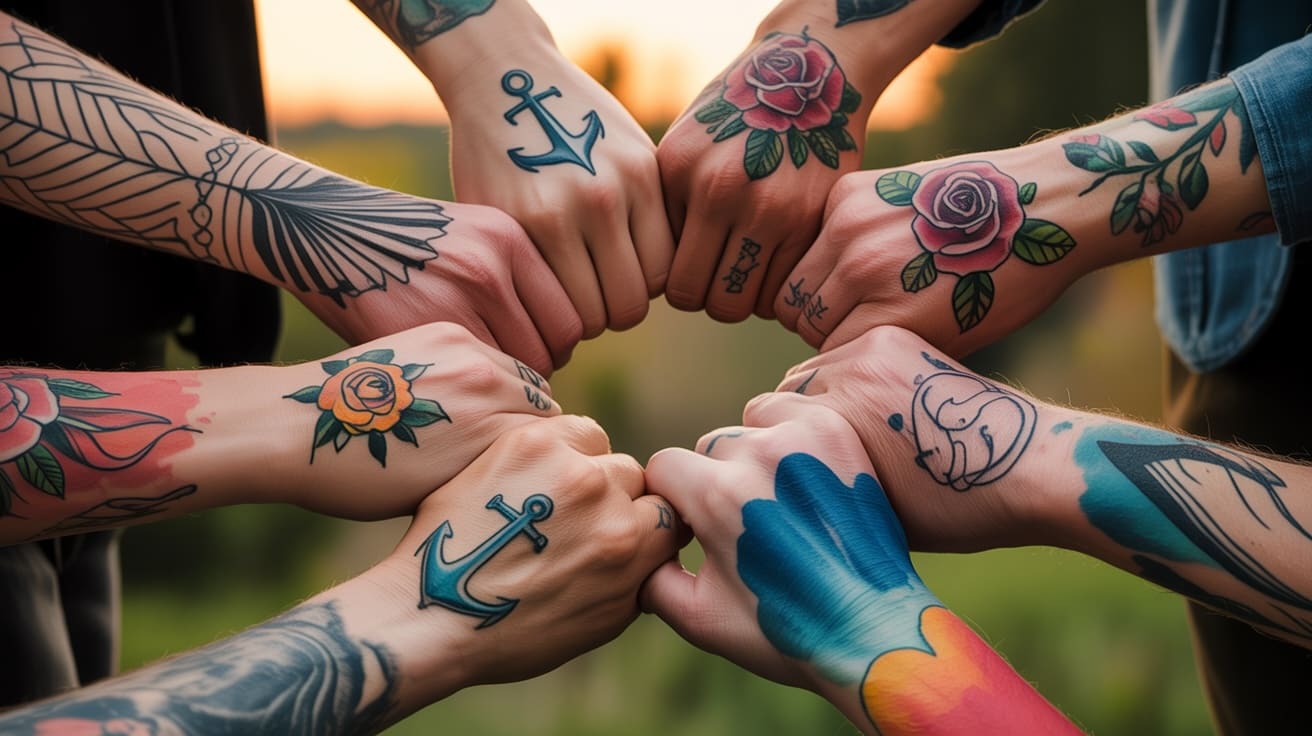
The Real Psychological Component: Control and Ownership
Here's what I think is the most interesting part of tattoo psychology, and it's something that doesn't get talked about enough:
Tattoos are one of the few ways we can exert permanent control over our own bodies.
Think about it. You can't control your height, your natural hair color, your bone structure, or most of your physical features. But you can control whether you have a dragon on your shoulder.
For a lot of people, that sense of ownership is incredibly powerful. It's not about rebellion or attention. It's about agency.
I've talked to clients who got tattoos after recovering from eating disorders, after surviving cancer, after leaving abusive relationships. For them, the tattoo wasn't just art. It was a way of saying, "This body is mine. I get to decide what happens to it."
And honestly? That's beautiful.
So What Does Your Tattoo Actually Say About You?
Here's my honest answer: probably less than you think, and definitely less than other people assume.
Your tattoo might say you're creative. Or that you value self-expression. Or that you had $200 and a free Saturday.
It might say you're sentimental, or impulsive, or thoughtful, or just someone who really likes wolves.
But it doesn't define you. It's not a personality test. It's not a moral judgment. It's just... a tattoo!
The psychology of tattoos is real. The correlations exist. But they're weak, context-dependent, and constantly evolving as tattoos become more mainstream.
So if you're thinking about getting a tattoo, don't overthink what it "says" about you. Get it because you want it. That's reason enough! And if you're looking to find a good artist for your next tattoo, you are already in the best place, here at Tattit platform.