Hourly Rates vs. Flat Rates: Which is Better for Your Tattoo Budget?

Hourly Rates vs. Flat Rates: Which is Better for Your Tattoo Budget?
Booking a new tattoo is an exciting milestone, but when the discussion turns to pricing, it can feel intimidating. Between "shop minimums," "hourly rates," and "flat rates," figuring out how much your next piece will cost requires a bit of math.
Most professional tattoo artists bill using one of two methods: an hourly rate or a flat rate (often structured as a half-day or full-day rate).
To help you manage your tattoo budget and eliminate surprises at the counter, here is a complete breakdown of how each pricing model works, their pros and cons, and which is best for your specific project.
The Basics of Tattoo Pricing
Before we compare billing methods, it is helpful to understand why artists charge the way they do. A tattoo fee does not just cover the active tattooing time. It also accounts for:
- Sterile, single-use supplies (needles, tubes, ink, barriers).
- Custom drawing and design prep time (often hours of unpaid work).
- Studio overhead, insurance, and licensing.
- The artist's years of specialized experience.
1. Hourly Rates: Paying for Precision Time
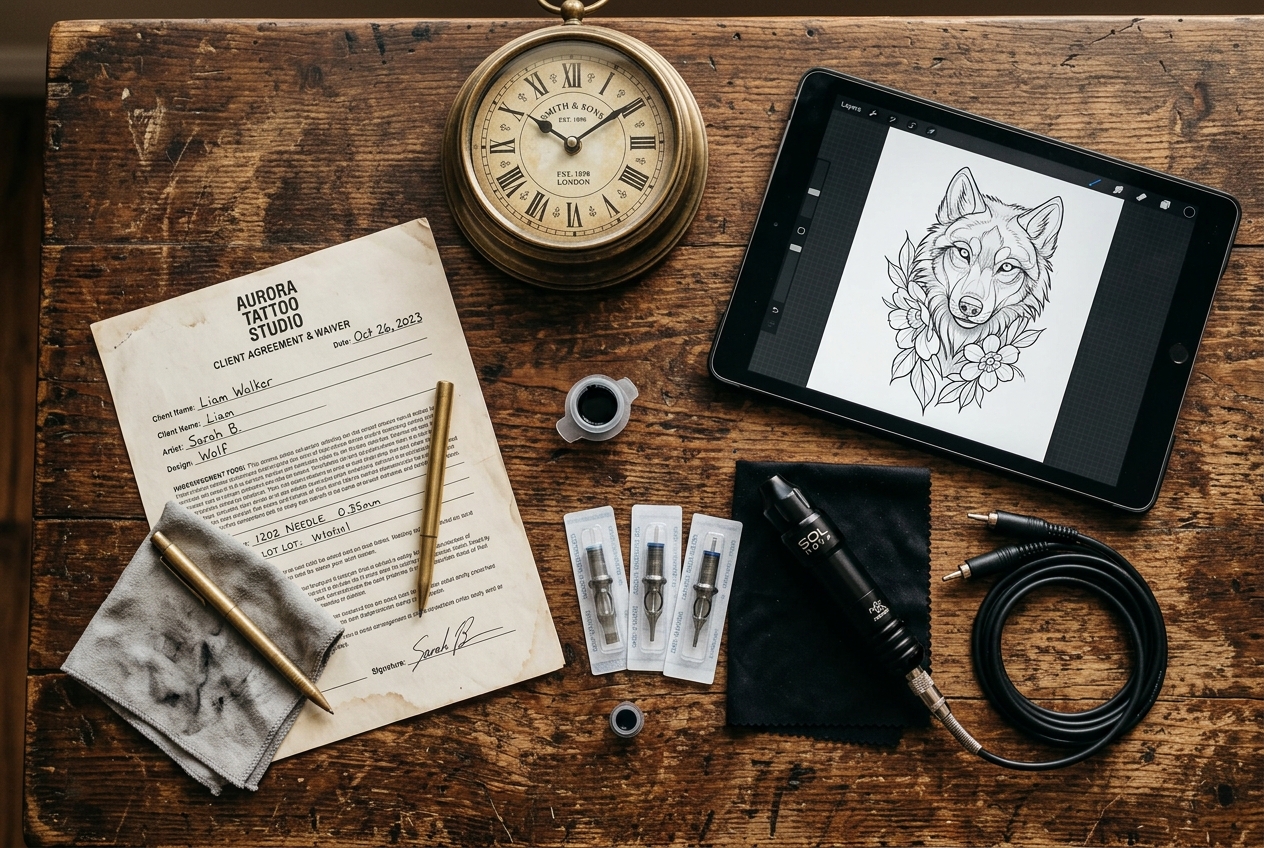
Hourly billing is the traditional standard in many tattoo shops. The artist sets a rate (e.g., $150 to $250 per hour) and keeps track of the time you are actively in the chair.
How Hourly Billing Works
Typically, the clock starts running when the needle hits the skin and stops when the bandage goes on. Most artists will not charge you for stencil placement or short setup adjustments, but they will charge for short breaks you request during the session.
The Pros:
- Fair for Simple Pieces: If a design is straightforward and the artist is fast, you only pay for the exact minutes used.
- Flexible Scaling: If you decide to make a piece smaller during the consultation, the price scales down naturally.
- Lower Initial Estimate: Ideal for smaller, single-session designs where time is easy to predict.
The Cons:
- Budget Uncertainty: If the artist is heavy-handed, works slowly, or runs into complications (like difficult skin texture), the final price can be higher than estimated.
- Anxiety in the Chair: Some clients find themselves watching the clock, feeling stressed that every minute passing is costing more money.

2. Flat Rates (Day or Piece Rates): Buying the Outcome
Flat rate pricing has become increasingly popular, especially among custom illustrative, realism, and large-scale artists. Instead of tracking the clock, the artist gives you a single set price for the entire piece or charges by the session type (e.g., a "half-day rate" or "full-day rate").
How Flat Billing Works
The artist assesses your design request, size, placement, and complexity, then quotes a fixed price. For large projects (like a sleeve), they might set a day rate (e.g., $1,000 for a 6-hour block), meaning you pay a flat fee regardless of whether they tattoo for 5 hours or 7 hours that day.
The Pros:
- Absolute Budget Certainty: You know exactly what the tattoo will cost before the needle even touches your skin. No surprises.
- Relaxed Session: There is no pressure on you or the artist. The artist can take their time to perfect details, and you can take breaks without worrying about the cost ticking up.
- Covers Non-Tattooing Design Time: Ensures the artist is fairly compensated for complex custom drafting.
The Cons:
- Potential Premium: If the session goes faster than expected, you still pay the agreed-upon flat price, making the effective hourly rate higher.
- Strict Revision Boundaries: Since the price is fixed, requests for major design alterations on the day of the appointment might trigger additional fees.
Which is Better for Your Budget?
To get the most out of your money, choose the pricing model that aligns with your tattoo's scale:
| Tattoo Type | Best Billing Model | Why? |
|---|---|---|
| Small, Flash, or Simple Linework | Hourly (or Flat Piece Rate) | Minimal drawing time; quick execution means a low hourly total. |
| Medium Custom Pieces (2–4 hours) | Hourly | Gives you the flexibility of paying for exactly what is needed without day-rate premiums. |
| Large Custom Work (Sleeves, Backpieces) | Flat Day Rates | Large-scale work is unpredictable. A flat day rate protects you from runaway hourly costs over multiple sessions. |
| Cover-Ups or Scar Camouflage | Flat Piece Rate | Cover-ups require extensive skin analysis and custom, layered tattooing. A flat rate allows the artist to focus entirely on coverage quality. |
Budgeting Tips for Your Next Session
- Ask for a Quote Range: If an artist bills hourly, ask for their estimated time range (e.g., "3 to 4 hours"). Budget for the high end of that range to be safe.
- Clarify What is Included: Ask if the drawing fee or deposit goes toward the final price of the tattoo.
- Budget for the Tip: In regions where tipping is customary, standard practice is 15% to 20% of the total price. Factor this into your budget calculations.
- Communicate Honestly: If you have a strict budget limit, tell the artist during the consultation. A good artist can often adjust the scale or complexity of the design to fit your financial boundaries.

