Micro-Realism Tattoos: Stunning Details vs. The 3-Year Reality Check

Micro-Realism Tattoos: Stunning Details vs. The 3-Year Reality Check
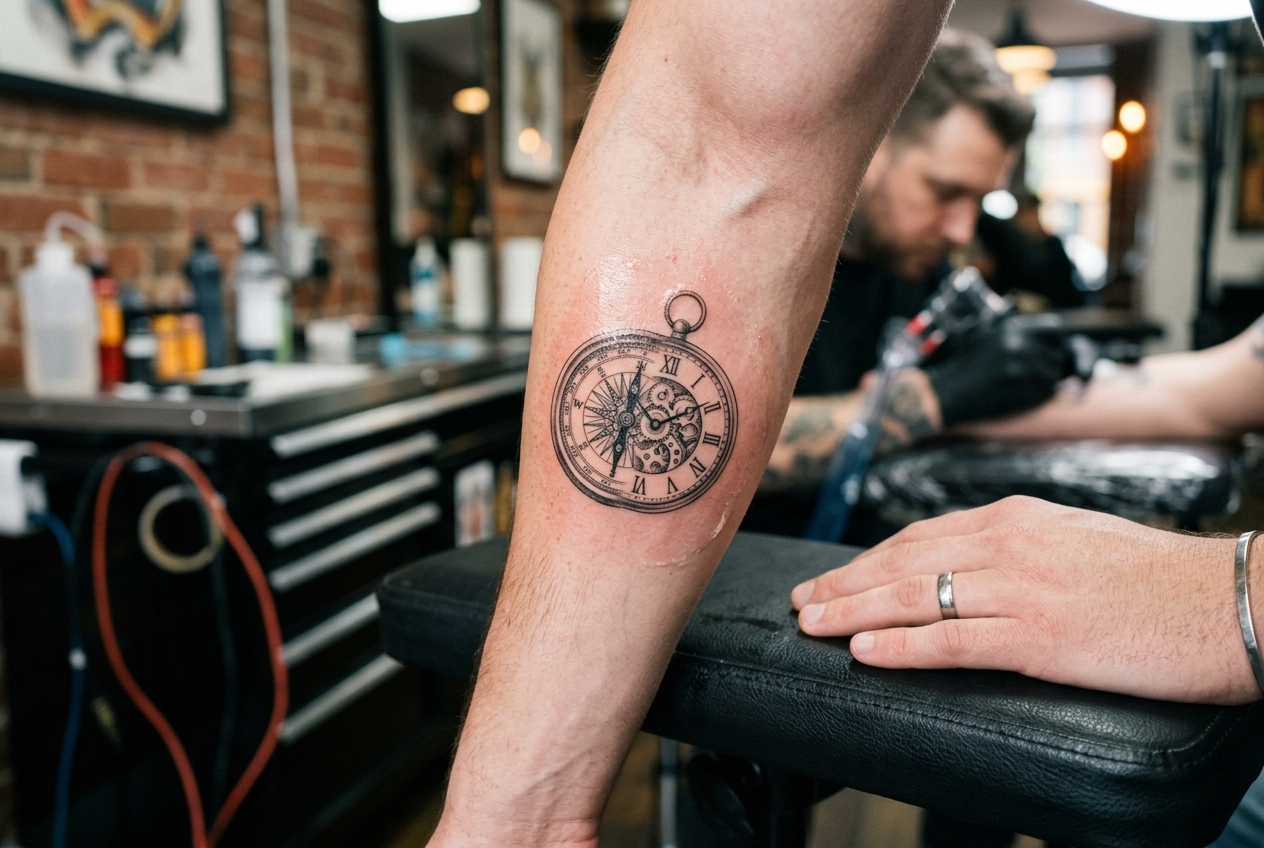
If you've spent any time browsing tattoo designs on Instagram or Pinterest recently, you've likely stopped mid-scroll to admire a micro-realism piece. A miniature Renaissance portrait the size of a postage stamp, a hyper-detailed stopwatch ticking on a wrist, or a tiny floral arrangement with dew drops that look real enough to touch.
These designs are masterpieces of precision, looking more like fine art paintings than traditional body art. But as the popularity of micro-realism continues to soar, an urgent question echoes through studios worldwide: "What will this look like in three years?"
Let's do a realistic check on micro-realism: how it ages, the science behind it, and how you can design a piece that actually lasts.
What Exactly is Micro-Realism?
Micro-realism is a specialized style that translates hyper-detailed photographic imagery into tiny, coin-to-palm-sized tattoos. Unlike traditional tattooing, which relies on bold black outlines to hold its structure, micro-realism is built on:
- Intricate, ultra-fine lines: Often done with single needles (1RL) or 3-needle liners (3RL).
- Soft grey washes: Creating realistic depth, shadows, and gradients.
- Minimal outline work: Letting contrast between light and dark define the shapes.
The 3-Year Reality Check: Why Skin is Not Paper
To understand how micro-realism ages, we have to look at the biology of your skin.
When a tattoo needle punctures your skin, it deposits ink into the dermis. The body immediately reacts to this as a wound, sending white blood cells called macrophages to clean up the area. Because the ink particles are too large, the macrophages cannot carry them away. Instead, they ingest the ink and remain locked in place in the dermis, making the art permanent.
However, your skin is not static. Over time:
- Ink Spreads: The macrophages slowly die off and are replaced by new ones, which swallow the released ink. This cycle, combined with natural cell movement, causes all tattoo lines to expand slightly.
- Sun Damage: UV radiation breaks down ink pigments, allowing macrophages to transport them away, causing fading.
- Collagen Loss: As you age, your skin loses elasticity and thickness, altering the appearance of the underlying ink.
For a traditional tattoo with thick outlines, a 10% line spread is invisible. But for a micro-realism portrait where a line is as thin as a hair strand, that same 10% spread causes fine details to blur together.
The 3-Year Comparison: Fresh vs. Healed
Here is what you can realistically expect from your micro-realism tattoo as it transitions from fresh to healed over three years:
The Fresh Stage (Day 1 - Month 3)
Your tattoo is a showstopper. The details are microscopic, the white highlights pop, and it looks like a photo printed onto your skin.
The Settled Stage (Year 1)
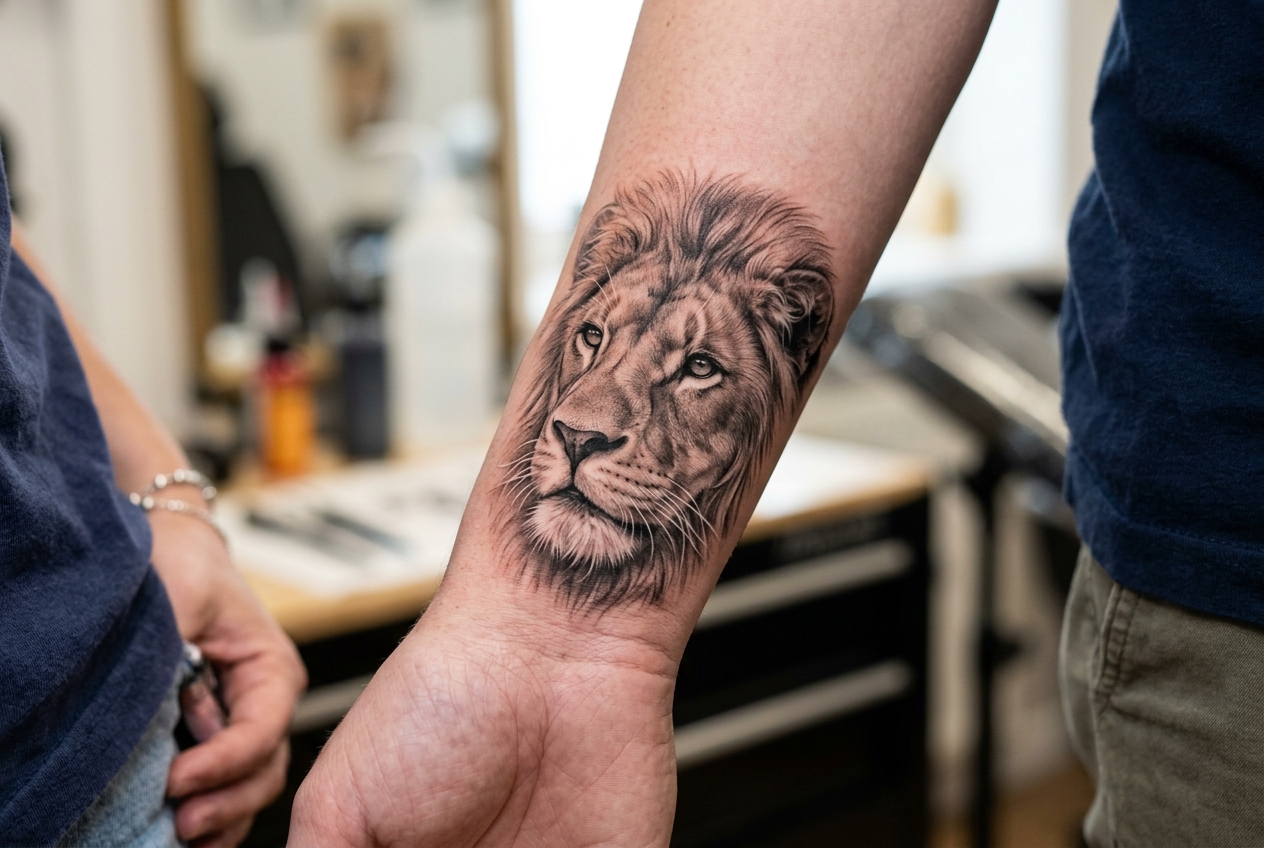
The skin heals completely, and a layer of new skin cells covers the ink. The tattoo softens, losing its sharp "surface" look and settling into a satin-like texture. White highlights will begin to fade or tint to your natural skin color.
The 3-Year Mark
This is the true test. A well-executed piece will still look beautiful, but it will have evolved:
- Softening of Contrast: The distinction between your dark shadows and light gray tones will decrease.
- Merging Details: Microscopic lines placed too close together (like the individual eyelashes on a tiny eye) may merge into a single shadow.
- Charcoal Effect: The piece will look less like a photograph and more like a soft, elegant charcoal sketch.
How to Design a Micro-Realism Tattoo That Lasts
You don't have to avoid micro-realism altogether to get a tattoo that ages well. You just need to plan smart:
1. Prioritize Contrast
The number one enemy of aging tattoos is a lack of contrast. If your design is entirely made of soft, light-gray shading, it will fade into a faint smudge within a few years. Ensure your design includes true black anchors to hold the shape together, paired with clean skin highlights (negative space).
2. Scale it Up (Slightly)
While "micro" is in the name, bigger is almost always better for longevity. Giving the elements in the design room to breathe prevents them from merging when the ink inevitably spreads. A portrait the size of a palm will look significantly better in five years than one the size of a half-dollar.
3. Choose the Right Artist
Micro-realism is not a style where you can look for the cheapest shop. It requires an artist with absolute master-level depth control. Going even a fraction of a millimeter too deep causes a blowout, while going too shallow results in the ink falling out during healing. Look for artists who actively post healed photos (at least 1-2 years old) in their portfolios.
The Golden Rule of Aftercare: Sunscreen is Non-Negotiable
If you commit to a micro-realism piece, you must commit to daily sun protection. UV rays break down fine lines and light gray shading incredibly fast. Apply SPF 50+ to your tattoo whenever it is exposed to the sun, and keep it hydrated with unscented lotion to maintain skin elasticity.
Frequently Asked Questions
Can micro-realism tattoos be touched up?
Yes! Because they use very fine lines and lighter shading, touch-ups are easy. An artist can re-saturate the dark shadows and redefine faded details to breathe new life into the piece.
Do they take longer to get?
Yes. Despite their small size, micro-realism tattoos can take hours because of the extreme precision required. Expect to sit patiently as the artist works with a single needle.
Will white ink highlights stay bright white?
No. White ink is translucent. As your skin heals over it, the white will take on your skin's undertone, eventually settling into a soft cream or light gray color.
