Red Light Therapy and Tattoos: Can It Speed Up Healing or Will It Fade Your Ink?

Red Light Therapy and Tattoos: Can It Speed Up Healing or Will It Fade Your Ink?
Red Light Therapy (RLT) has taken the skincare and wellness world by storm. From treating acne and wrinkles to speeding up muscle recovery and wound healing, LED light panels are now staple fixtures in home setups and clinical spas.
But if you are heavily tattooed or have a fresh piece of ink currently healing, you might have wondered: "Is red light safe for my tattoos?"
Because light radiation (specifically UV light from the sun) is the number one cause of tattoo fading, it is natural to be cautious about exposing your body art to concentrated light sources.
Let's dive into the photobiology of red light, how it interacts with tattoo pigments, and whether it helps fresh tattoos heal or causes premature fading.
How Red Light Therapy Works
To understand how RLT affects ink, we have to look at the wavelengths used.
Unlike tanning beds or sunlight, which emit damaging Ultraviolet (UV) radiation, Red Light Therapy utilizes specific, non-thermal wavelengths of light:
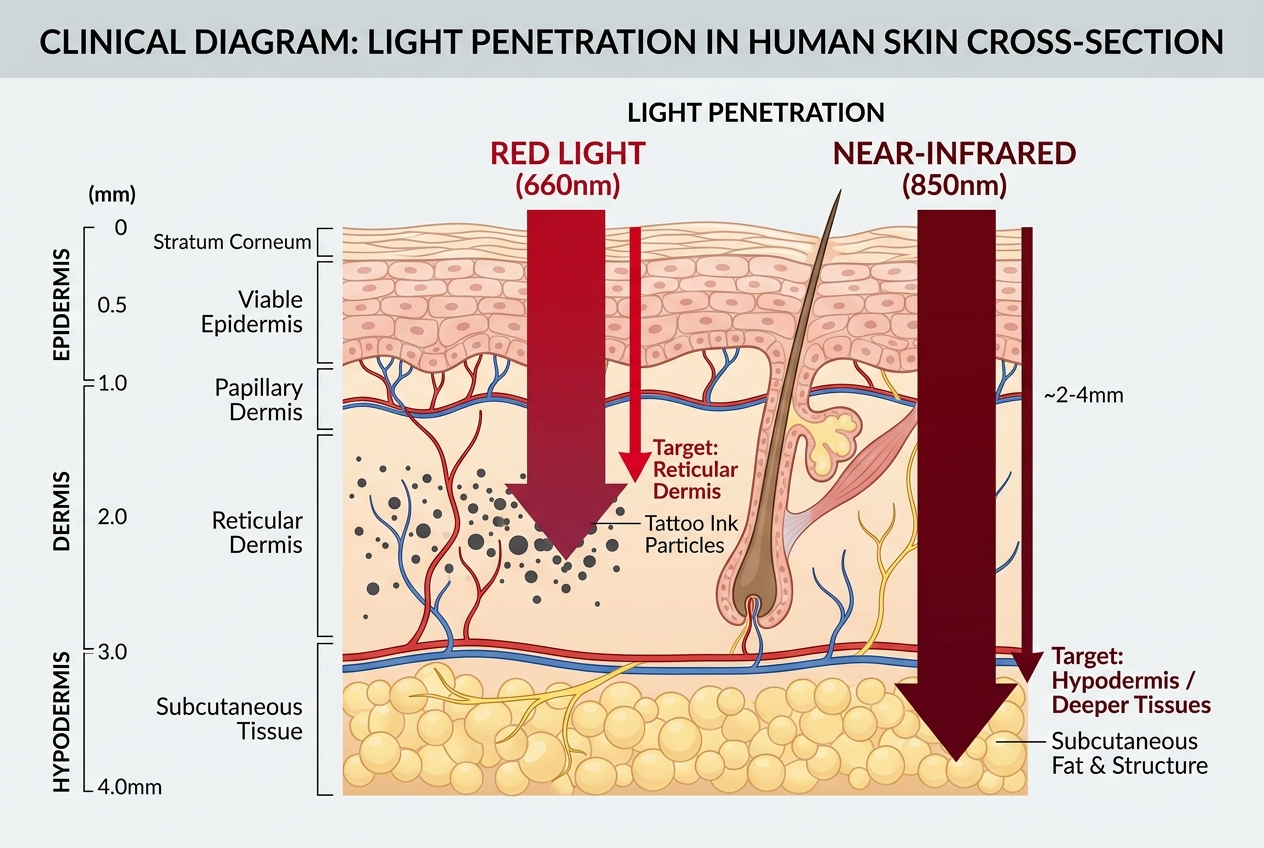
- Red Light (around 660 nanometers): Absorbed heavily by the top layers of skin to boost collagen, reduce inflammation, and accelerate superficial wound healing.
- Near-Infrared Light (around 850 nanometers): Penetrates much deeper into the skin and muscle tissue to help with deep cellular repair, blood flow, and pain relief.
Because these wavelengths lack UV radiation, they do not damage skin cells or break down ink pigments in the same way sunlight does.
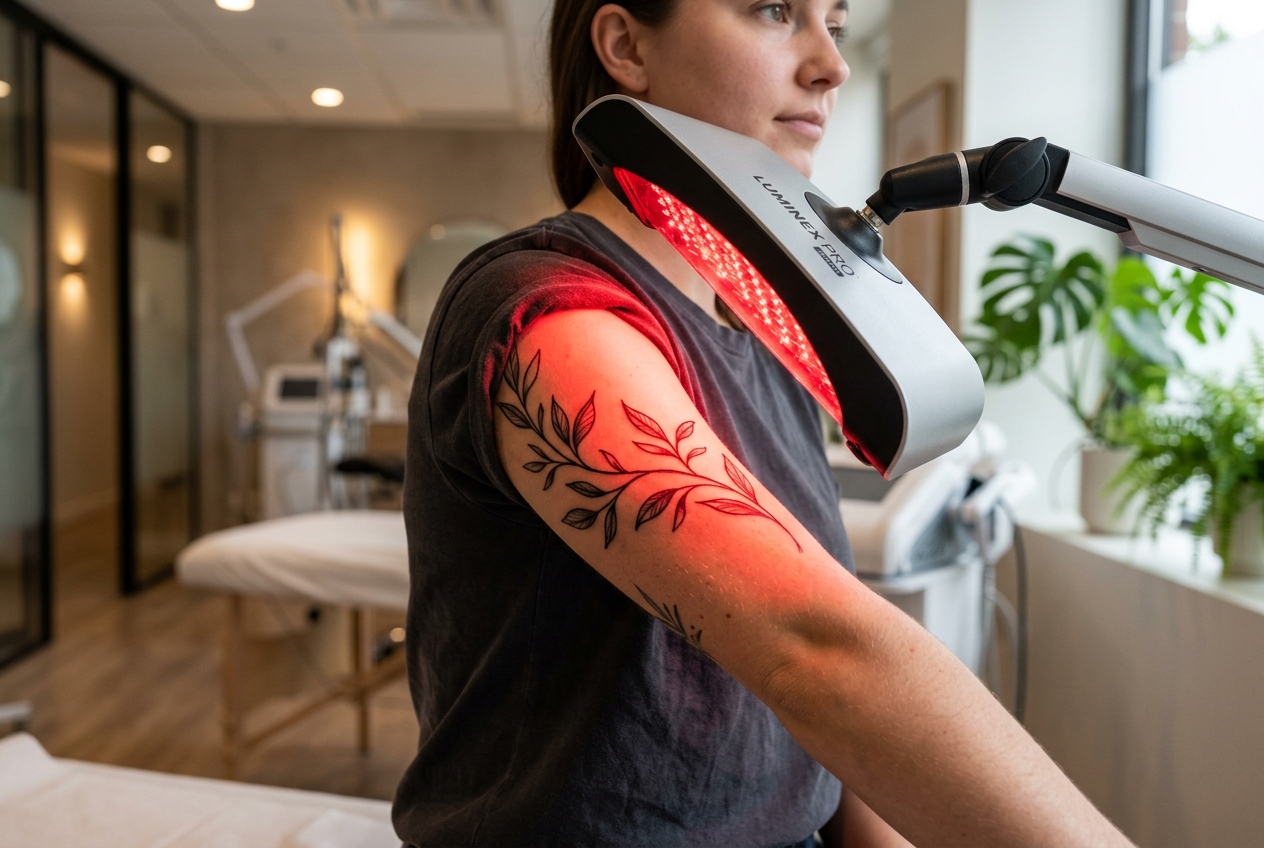
Will Red Light Therapy Fade Healed Tattoos?
The short answer is no.
Tattoo fading occurs when high-energy UV light (UVA and UVB) penetrates the dermis and shatters the ink particles into tiny pieces. Your body's lymphatic system can then sweep up these tiny fragments, carrying them away and causing the design to fade. (This is the exact scientific concept used in laser tattoo removal, which utilizes high-powered, concentrated light pulses).
Red and near-infrared light, however, operate at the opposite end of the light spectrum. The energy level of a 660nm or 850nm LED bulb is far too low to break the chemical bonds of tattoo pigments.
Furthermore, because RLT stimulates collagen synthesis, it can actually make your skin healthier and firmer, which can make healed tattoos look slightly crisper and more vibrant against healthy skin.
Can You Use Red Light on a Fresh, Healing Tattoo?
While red light won't fade a healed tattoo, using it on a fresh tattoo is a different story.
A fresh tattoo is an open wound. The skin barrier is compromised, and the ink particles are currently floating in the dermis, waiting for macrophages (white blood cells) to lock them in place.
Here is why you should proceed with caution:
The Potential Benefits:
Because red light therapy increases local blood circulation and cellular energy (ATP), it can significantly accelerate the skin's natural healing process. It reduces swelling, decreases redness, and minimizes itching.
The Risks:
- Ink Migration: In the first 48 to 72 hours, the tattoo ink has not settled. The intense boost in blood flow and lymphatic activity caused by near-infrared light can theoretically cause your body to reject or transport more ink particles, leading to minor fading or blurry lines.
- Device Cleanliness: Pressing or hovering a home LED mask/panel close to an open wound increases the risk of bacterial contamination.
- Over-heating: Although LED light is cool, some high-powered panels emit minor heat. Keeping a fresh tattoo under a heat source can dry out the skin prematurely, leading to heavy scabbing.
The Recommendation:
Avoid RLT on a fresh tattoo for the first 5 to 7 days. Allow the skin barrier to close and the peeling stage to begin naturally. Once the tattoo is no longer an open wound, you can resume low-intensity red light therapy to assist with dry skin scaling and tissue recovery.

Summary: Red Light Safety Checklist
If you use red light therapy regularly, keep this simple safety checklist in mind:
- Healed Tattoos (2+ weeks old): 100% safe. RLT will not fade your ink and may improve skin texture around it.
- Fresh Tattoos (Day 1 - 7): Keep them covered or avoid direct red light exposure. Let the ink settle first.
- Avoid Tanning Beds: Tanning beds use UV light. Do not confuse them with Red Light LED panels!
- Consult Your Artist: Always follow your specific artist’s aftercare guidelines above all else.


