The Science of UV Breakdown: Why Tattoos Fade and How to Choose the Right Sunscreen

The Science of UV Breakdown: Why Tattoos Fade and How to Choose the Right Sunscreen
We’ve all heard the golden rule of tattoo ownership: wear sunscreen.
Tattoo artists emphasize it, blogs rave about it, and veteran collectors swear by it. But have you ever stopped to wonder about the biology and physics behind this rule? What is actually happening under your skin when sunlight hits your tattoo? And why does a simple cream stop your body art from turning into a blurry, faded smudge?
Let’s dive into the science of UV breakdown, look at how sunlight alters tattoo pigments, and learn how to select the absolute best sunscreen to protect your investment.
Why Tattoos Exist in Your Skin (And How UV Attacks Them)
To understand UV breakdown, we must first look at where tattoo ink lives.
A tattoo machine pushes ink particles into your dermis, the thick, stable layer of skin beneath the outer epidermis. Your body’s immune system views these ink particles as foreign invaders and sends white blood cells called macrophages to destroy them.
However, the ink particles are too large and heavy for these tiny cells to digest. The macrophages end up swallowing the ink and staying locked in place within your skin, creating a permanent tattoo.
But sunlight introduces a powerful competitor: Ultraviolet (UV) radiation.
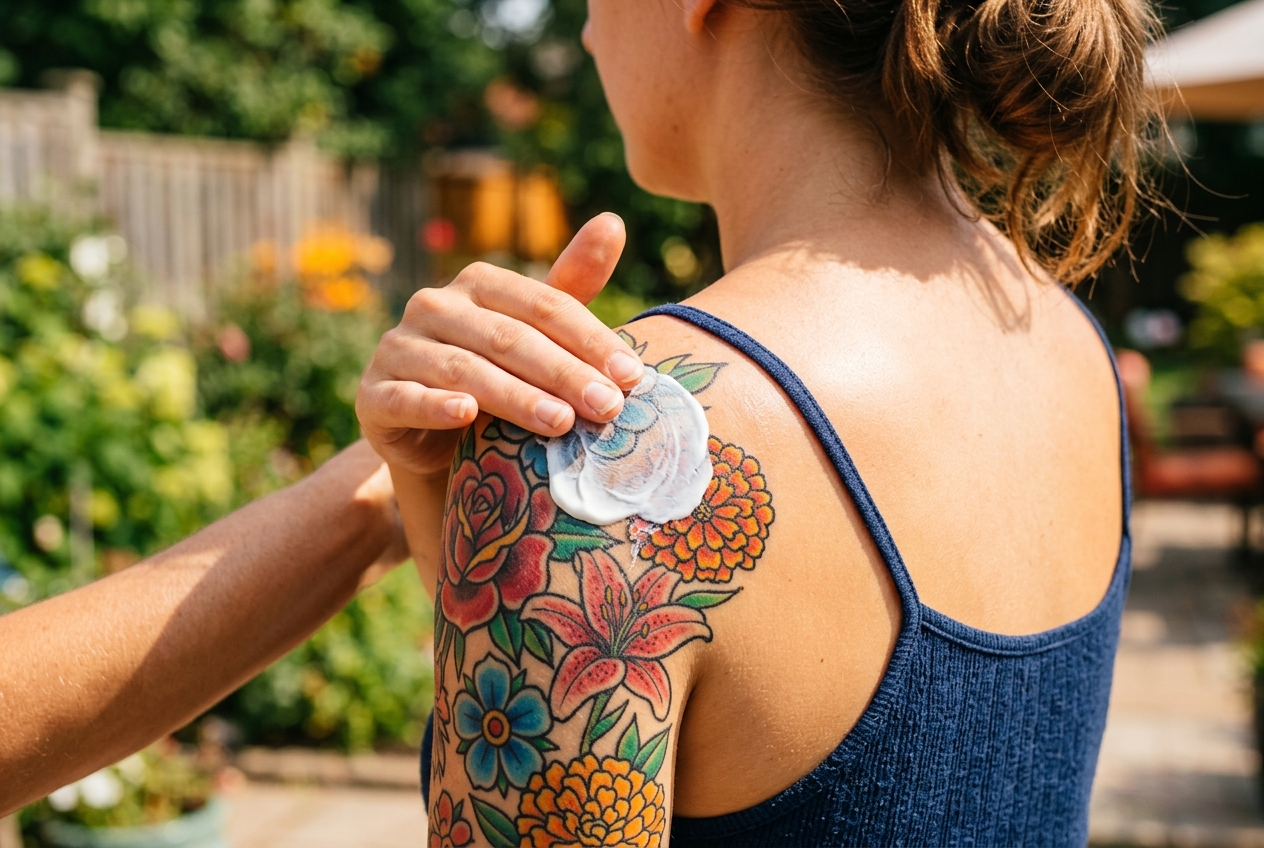
The Science of Photodegradation (UV Breakdown)
Sunlight emits two types of UV rays that reach the Earth's surface and penetrate your skin:
- UVA Rays (Long-wave): Penetrate deep into the dermis. These are responsible for skin aging, collagen damage, and long-term tattoo fading.
- UVB Rays (Short-wave): Penetrate the outer epidermis. These cause sunburns and immediate skin damage.
When UVA and UVB rays penetrate your skin and hit the ink particles trapped inside your dermis, a process called photodegradation (or photolysis) occurs.
The high-energy UV radiation breaks down the chemical bonds of the ink pigments. Think of the UV rays as a tiny, molecular jackhammer. Over time, this constant pounding shatters the large, stable ink particles into much smaller fragments.
Once the ink particles are broken down into microscopic pieces, your immune system’s macrophages are finally small enough to carry them away. They transport the shattered ink fragments through your lymphatic system to your liver and kidneys, which filter them out of your body naturally.
In short: when your tattoo fades in the sun, your body is literally digesting and excreting the ink.
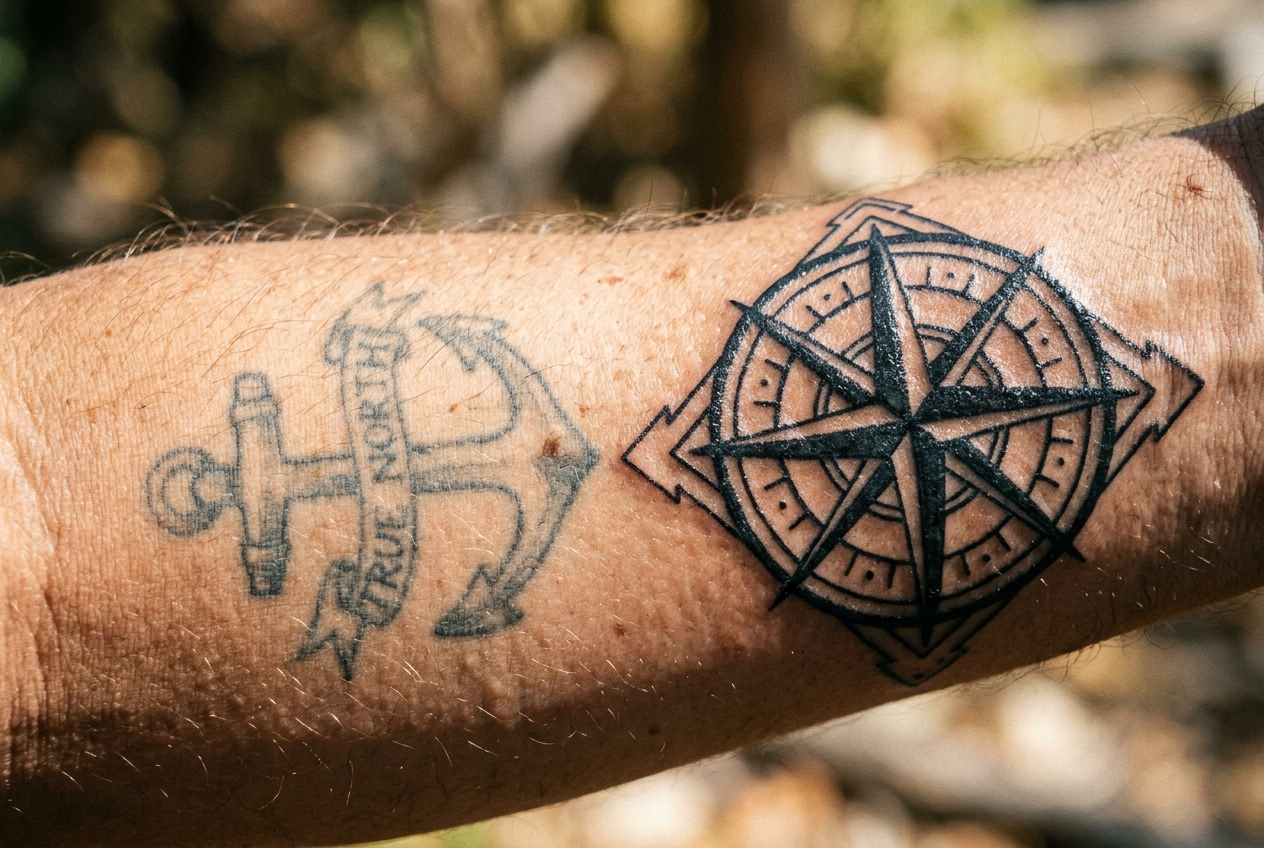
Which Colors Fade First?
Not all tattoo inks are created equal. Because of their chemical compositions, different pigments respond differently to UV rays:
- Black and Dark Grey: These are the most stable pigments. They absorb the full spectrum of light but possess strong carbon bonds that resist breaking down, making them the most fade-resistant.
- Vibrant Colors (Red, Orange, Yellow): These pigments have smaller molecular structures and break down significantly faster under UV exposure.
- Pastels and White: These are highly unstable and can disappear or tint to your natural skin color within a few years of unprotected sun exposure.
How to Choose the Right Sunscreen for Tattoos
Walk down any skincare aisle, and you’ll see dozens of sunscreens. To protect your tattoos, you need to understand the difference between the two main types: chemical and mineral (physical).
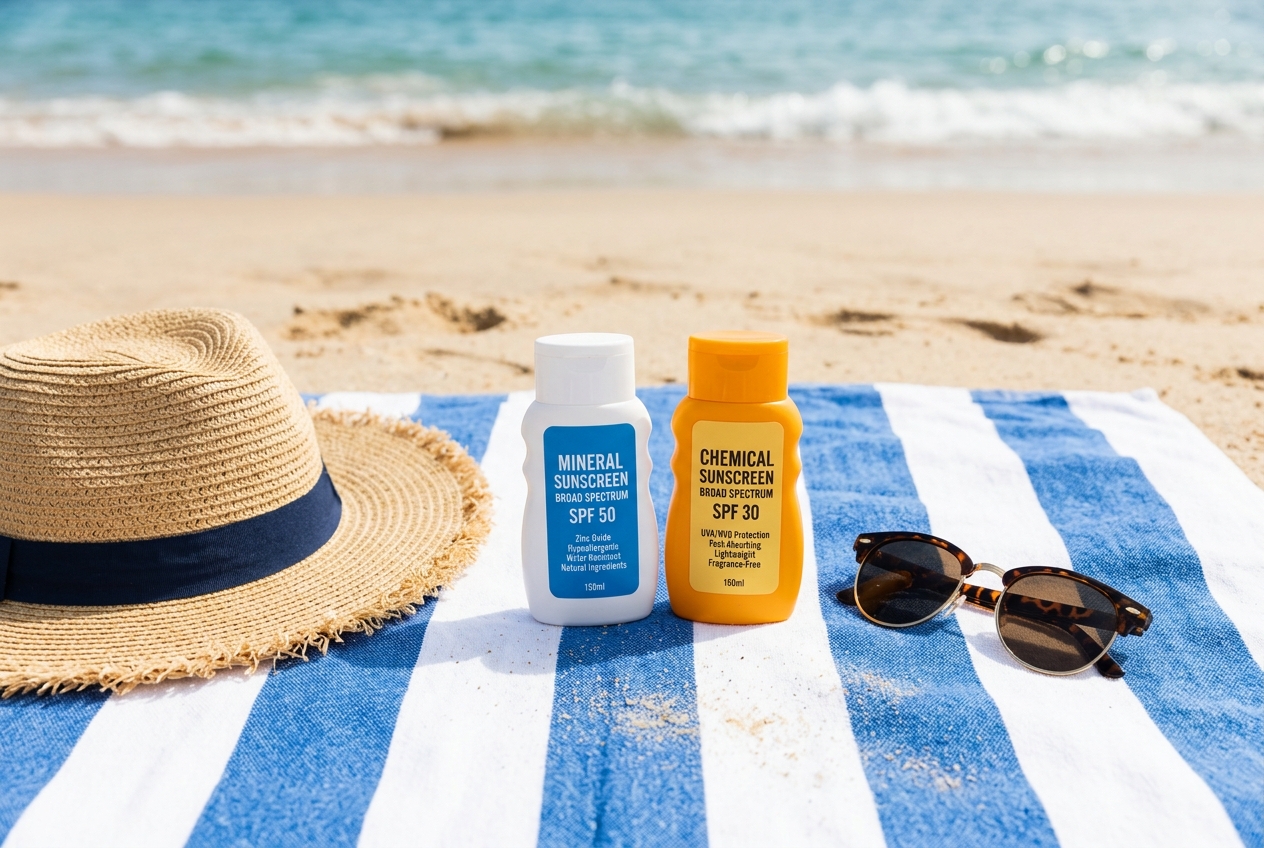
1. Mineral (Physical) Sunscreen — The Gold Standard for Tattoos
Mineral sunscreens use natural active ingredients like Zinc Oxide or Titanium Dioxide.
- How they work: They sit on top of the skin and act like a literal mirror, reflecting UV rays away from your body before they can penetrate the dermis.
- Why they are best for tattoos: By reflecting the light entirely, mineral sunscreens ensure zero UV radiation reaches your ink particles. They are also hypoallergenic, making them safer for sensitive, tattooed skin.
2. Chemical Sunscreen
Chemical sunscreens use organic compounds like Oxybenzone, Avobenzone, or Octisalate.
- How they work: They absorb into the skin, capture UV rays, convert the radiation into heat, and release that heat from the body.
- Why they are less ideal: Because chemical sunscreens absorb UV light into the skin layers, minor UV energy still interacts with the dermis, which can contribute to slow ink breakdown over decades. They can also irritate sensitive skin.
Tattoo Sun Care Best Practices
- Wait for Complete Healing: Never apply sunscreen to a fresh, healing tattoo. Sunscreen contains chemicals and minerals that can trap bacteria in an open wound. Wait at least 14 to 21 days until the skin is fully closed and peeled before applying sunscreen.
- Broad-Spectrum SPF 30 to 50: Always choose a "Broad-Spectrum" label, which ensures protection against both UVA (fading) and UVB (burning). SPF 30 blocks 97% of UVB rays; SPF 50 blocks 98%. Anything higher offers negligible extra protection.
- Reapply Every 2 Hours: Sunscreen breaks down when exposed to sweat, water, and air. Reapply regularly during outdoor activities.
- Cover Up: If you are planning a full day in intense heat, physical clothing (like a light long-sleeve shirt) is still the ultimate barrier against UV ink damage.


